Jewish literature and reception
Book of Enoch: Laurence’s English and a short excerpt
A short Enoch card with Richard Laurence’s wording, an excerpt on heavenly order, and links for further reading.
The Book of Enoch the Prophet presents visions and speeches under Enoch’s name. Richard Laurence’s English version opens with a blessing of the elect and righteous, followed by descriptions of the heavens and the earth. The regular paths of heavenly lights and the recurring seasons form the subject of the passage below.
Read: chapter III, paragraphs 2 and 3
They know that the heavenly luminaries change not their paths; that each rises and sets regularly, every one at its proper period, without transgressing the commands which they have received. They behold the earth, and understand what is there transacted, from the beginning to the end of it.
They see that every work of God is invariable in the period of its appearance. They behold summer and winter: perceiving that the whole earth is full of water; and that the cloud, the dew, and the rain refresh it.
The numbers 2 and 3 identify the paragraphs of chapter III.
Source: Laurence’s translation, The Book of Enoch the Prophet (1883 printing). Scope: chapter III, paragraphs 2 and 3, a short selection, not the complete work. Read the full text at Project Gutenberg.
Order in the heavens and an accusation on earth
Chapter III describes lights that keep to their appointed paths, each rising and setting at its proper time. The account then widens to summer, winter and the water that refreshes the earth. Repeated acts of seeing connect the two paragraphs: the observers recognise order in both the heavens and the changing earth.
Chapter VI gives that description an argumentative purpose. Trees bear leaves and fruit, while seas and rivers perform their tasks; the address then accuses its human hearers of failing to fulfil the Lord’s commandments. The natural order supplies the comparison through which their disobedience is described.
About this translation
Laurence’s translation was first published in 1821; the introduction says he “issued his first edition in 1821”. The title page of this printing gives 1883, credits translation from an Ethiopic manuscript in the Bodleian Library, and says the text was corrected from Laurence’s latest notes. The numbered prose paragraphs follow that edition’s chapter divisions.
Further reading: the works called Enoch and translation choice, the Ethiopian canon, and the Book of Watchers entry.
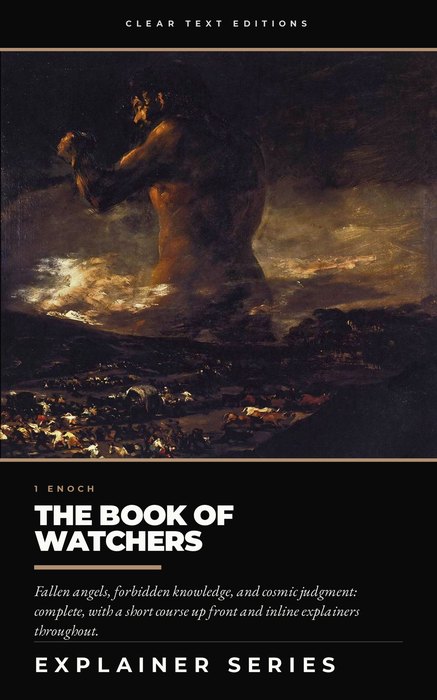
The Clear Text Edition
Get this edition
The Book of Watchers. Early Jewish Enoch literature, with its later Christian reception kept distinct.
- The Book of Watchers, 1 Enoch 1–36, in clear modern English.
- A short introductory course explains the setting before you begin.
- Labelled inline explainers sit beside the passages that need them.
Read a passage from this edition
Let's swear an oath, together. Let's bind ourselves with a curse, so none of us backs out before it's done.
Clear Text Editions, Book Of Watchers; excerpt quoted in the edition's launch description.
Questions and answers
What does this Enoch passage describe?
Chapter III describes heavenly lights following their appointed paths and seasons recurring in order. This excerpt uses that description as a starting point for reading the text’s contrast with human disobedience in chapter VI.
Which translation is this, and is it the whole book?
This is Richard Laurence’s translation from an Ethiopic manuscript in the Bodleian Library, in a printing dated 1883. The page contains only chapter III, paragraphs 2 and 3, rather than the whole book.
Where should I go for more reading on Enoch?
Use the guides to the works called Enoch and the Ethiopian canon, or the Book of Watchers entry on this site. The links below lead to those readings.
Read next
Sources: Richard Laurence, The Book of Enoch the Prophet (Project Gutenberg eBook 77815); https://www.gutenberg.org/ebooks/77815.
Last reviewed .