Classical philosophy: read the argument behind the quotation
Begin with a Stoic notebook, compare translations, and use a passage as the entrance to a larger text.
A quotation is a small piece of an argument or a reading practice. Before treating it as a universal instruction, ask who wrote it, to whom, and what the surrounding passage does.
Begin with Marcus Aurelius
The Meditations sample opens a morning exercise from Book 2. Marcus anticipates difficult people and then reasons about his relation to them. Stopping at the list of their faults makes the passage sound very different from reading its continuation about kinship and cooperation.
The historical English shown here is George Long's translation. Its vocabulary and sentence structure are part of the reading experience. A modern English adaptation changes that experience; it should also explain which translation it follows and retain references that allow comparison.
Philosophy as a reading practice
Give a short passage two readings. First identify its claim. Then ask what reason is offered for it. Note the word that carries the argument: nature, reason, judgment, good. Everyday meanings can be a misleading guide to a philosophical term.
For a wider route, Masters of Philosophy supplies author guides, comparisons and courses. Its Meditations edition guide compares source translations and reader needs rather than pretending there is one edition for every purpose.
Where this shelf begins
This first collection concentrates on a small classical-philosophy entrance. It is not yet a survey of Greek, Indian, Chinese and other philosophical literatures. Expansion should add real texts and competent contextual work, not empty categories promising a library that does not exist.
The Clear Text Editions bookshelf
Keep reading Marcus Aurelius
The complete work, with the context to understand it. Explore the sources, see the differences, find your next book.
Classical philosophy
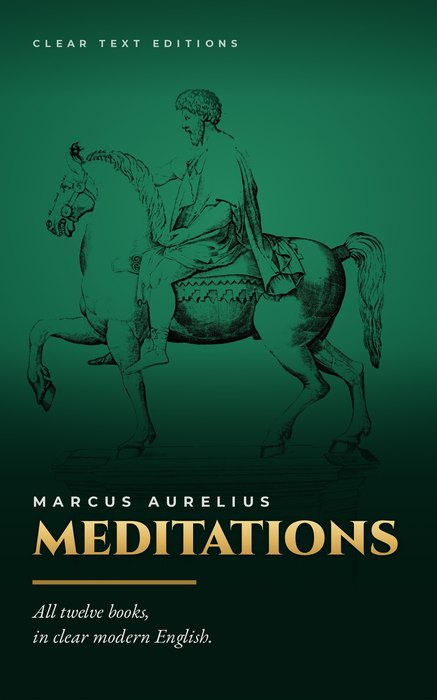
Meditations
- All twelve books, with the standard book and section numbering.
- A modern rendering of George Long's 1862 translation, with its source and limits stated.
- A primer, three diagrams, per-book concept pages and historical engravings.
Questions and answers
Is Meditations a textbook of Stoicism?
Marcus Aurelius’s Meditations is a personal collection of philosophical reflections, not a systematic textbook teaching Stoicism from first principles.
Should I read quotations or the whole passage?
Read a philosophical quotation in its numbered passage and surrounding context before treating it as the author’s complete position.
Read next
Sources: Marcus Aurelius, Meditations 2.1, George Long translation (1862); https://classics.mit.edu/Antoninus/meditations.2.two.html.
Last reviewed .