Free course · Introductory
Stoicism: An Introduction
A free two-part course on Stoic philosophy, from Zeno of Citium (c. 334-262 BC) to Marcus Aurelius (121-180). Part One sets out the school's core teaching: what is up to us, virtue as the only good, and the passions. Part Two turns to nature and the logos, the view from above, time and death, and how to read Seneca, Epictetus and the Meditations.
Part One: The School and Its Teaching
-
Lesson 1
Who the Stoics were, from Zeno to Marcus
Five centuries of one school in brief: its founding in Athens around 300 BC, the three heads who built its system, its move to Rome, and the three Roman writers whose books we still read.
-
Lesson 2
What is up to us
Epictetus's opening distinction between what is up to us and what is not: what falls on each side, why judgment sits at the center, and three common misreadings.
-
Lesson 3
Virtue as the only good
The Stoic claim that only virtue is good and only vice is bad, the class of things they called indifferent, the four virtues, and why the claim sets Stoicism apart from Aristotle and from Epicurus.
-
Lesson 4
The passions
What the Stoics meant by a passion, their four kinds, the good feelings that replace them, the involuntary first movements that come before them, and why Seneca refused to settle for moderation.
Part Two: Nature, Time and the Texts
-
Lesson 5
Living according to nature, and the logos
The Stoic goal of life in its three ancient formulas, the physics behind it, the logos that orders the world and the mind, and the idea of a single city of gods and human beings.
-
Lesson 6
The view from above: time and death
How Marcus Aurelius and Seneca used scale, time and the thought of death to set human affairs at their true size, and why the exercise is meant to return the reader to duty, not to contempt for the world.
-
Lesson 7
Reading the Stoics today
What survives from Seneca, Epictetus and Marcus Aurelius, how each kind of book asks to be read, an order for a first reading, and what to watch for in translations and modern retellings.
Start with lesson one
The Clear Text Editions bookshelf
Keep reading, with the text in hand.
The complete work, with the context to understand it. Explore the sources, see the differences, find your next book.
Stoicism
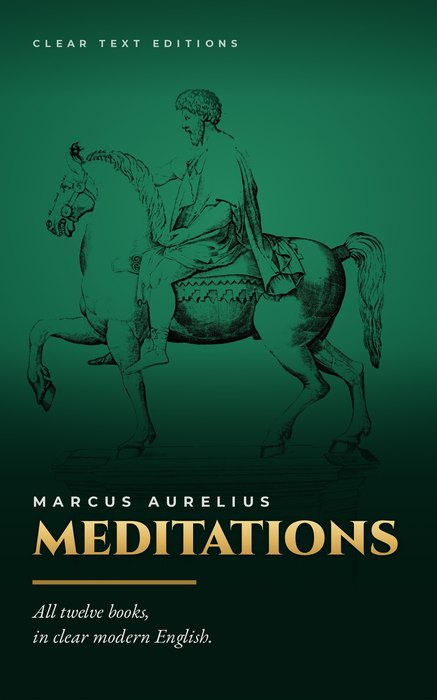
Marcus Aurelius
- All twelve books, with the standard book and section numbering.
- A modern rendering of George Long's 1862 translation, with its source and limits stated.
- A primer, three diagrams, per-book concept pages and historical engravings.
Stoicism
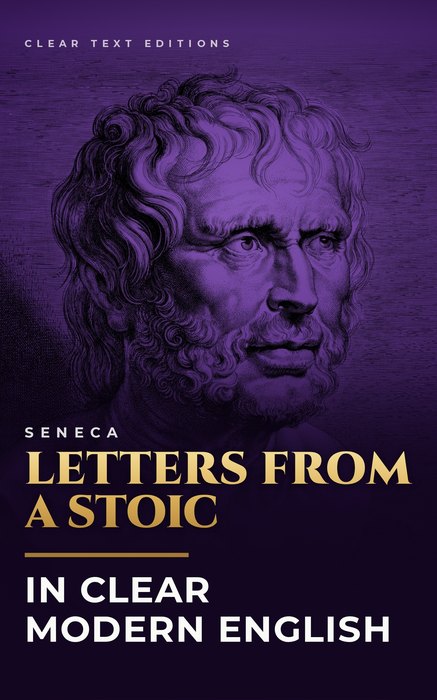
Seneca
- All 124 Moral Letters, complete and in order, from Gummere's 1917–1925 translation.
- 35 Key Concepts boxes and seven concept maps with facing explanations.
- Four of Seneca's essays and two further appendices, with their sources identified.