Stoicism: An Introduction · Lesson 1 · Part One: The School and Its Teaching
Who the Stoics were, from Zeno to Marcus
Five centuries of one school in brief: its founding in Athens around 300 BC, the three heads who built its system, its move to Rome, and the three Roman writers whose books we still read.
A school named after a building
Around 312 BC a young man from Citium, on Cyprus, arrived in Athens. Later writers told the story that he had been shipwrecked, wandered into a bookshop, and heard someone reading from Xenophon's memoir of Socrates. He asked where men like that could be found. The bookseller pointed to Crates the Cynic, who happened to be passing. The tale may be improved in the telling, but it places Zeno where he belongs: between Socrates and the Cynics, taking from both.
Zeno began teaching around 300 BC, not in a private garden like Epicurus or a gymnasium like Plato's Academy, but in a public colonnade on the edge of the Agora. It was called the Stoa Poikile, the Painted Porch, after the battle paintings on its walls. His followers were first called Zenonians and then Stoics, "the porch people." The name outlasted the paintings.
Building the system
Zeno set the direction. His successor Cleanthes of Assos, a former boxer who was said to draw water at night to pay for his lessons, gave the school its religious voice; his Hymn to Zeus is the longest early Stoic text to survive whole. The third head, Chrysippus of Soli (c. 279-206 BC), gave it its system. He argued every point, answered every critic and wrote, by ancient count, 705 books. A line repeated in antiquity said that without Chrysippus there would have been no Stoa.
The Stoics divided philosophy into three parts: logic, physics and ethics. One of their images was a fenced field. Logic is the fence that keeps out error, physics is the soil and the trees, and ethics is the fruit. The image matters for anyone reading the Stoics today, because it says that the ethics everyone quotes grows out of a theory of nature and a theory of knowledge. Pull the fruit off the tree and it does not keep.
The move to Rome
In 155 BC Athens sent three philosophers to Rome on a diplomatic mission, and one of them was the Stoic Diogenes of Babylon. Roman audiences were struck. Over the next century Panaetius of Rhodes lived among Rome's governing class, and his work on duties became the basis of Cicero's On Duties (44 BC). Posidonius taught at Rhodes, where Cicero heard him. Cato the Younger, who killed himself at Utica in 46 BC rather than accept Caesar's pardon, became the Roman picture of a Stoic life.
Under the emperors the school produced the three writers we still read:
- Seneca (c. 4 BC-AD 65), statesman, playwright and adviser to Nero, whose essays and Letters to Lucilius teach Stoicism to a friend. He died on Nero's orders.
- Epictetus (c. AD 50-135), born a slave in Phrygia, who studied under Musonius Rufus, was freed, and later taught at Nicopolis in western Greece after the philosophers were expelled from Rome. He wrote nothing himself. His student Arrian recorded his lectures.
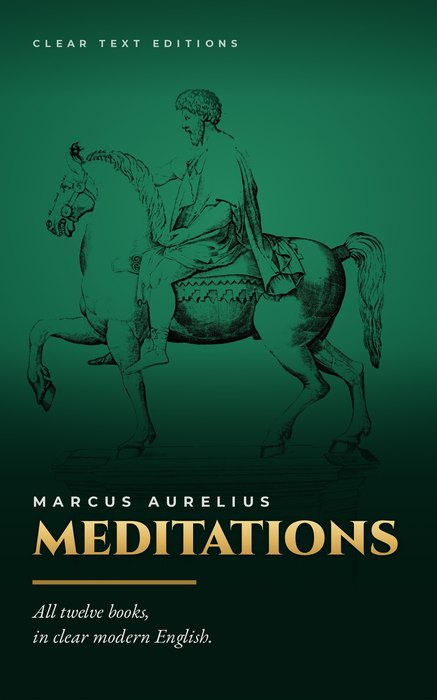
- Marcus Aurelius (AD 121-180), emperor from 161, who wrote the notebooks we call the Meditations in Greek, largely while on campaign on the Danube frontier.
What we have, and what we don't
Almost everything written by the Athenian founders is lost; Cleanthes's hymn, preserved in an anthology, is a rare exception. What we know of Zeno and Chrysippus comes from quotations and summaries in later authors: Cicero, Plutarch (often hostile), Sextus Empiricus, the doctor Galen, and Diogenes Laertius, whose Lives (3rd century AD) devotes its seventh book to the Stoics. Modern scholars gathered the fragments in Hans von Arnim's Stoicorum Veterum Fragmenta (1903-1905).
This creates an odd imbalance. The Stoicism most readers meet is the late, Roman Stoicism of Seneca, Epictetus and Marcus, which is mostly ethics and mostly practical. The physics and logic were assumed by all three, and they appear in their writings mainly as reminders. This course follows the Roman writers, because they are the ones you can read, but it brings in the older system wherever the Romans assume it.
Marcus as a reader
Book 1 of the Meditations is a list of debts. Marcus thanks his family, his teachers and the gods, one by one, for what each taught him. In section 7 he thanks Junius Rusticus, who made him see that his character needed correction and who lent him his own collection of Epictetus's discourses. In section 14 he thanks Severus for introducing him to the idea of a state ruled by equal law for all.
The book shows Marcus as he saw himself: not a founder or a master, but a student who had been given a great deal and was trying to live up to it. That is a good way to approach the school as a whole. Stoicism was a tradition of teachers, students and books, handed on over five hundred years, and the Meditations is one of its last and most private products.
Further reading: what each of the twelve books covers, starting with Book 1 and its debts, is in Meditations, Book by Book.
Reading
- Meditations
- Diogenes Laertius, Lives of the Eminent Philosophers
Questions and answers
Who founded Stoicism?
Zeno of Citium (c. 334-262 BC), a merchant's son from Cyprus, founded Stoicism in Athens around 300 BC. He taught in the Stoa Poikile, the Painted Porch beside the Agora, and the school took its name from the building.
Who were the most important Stoic philosophers?
The most important Stoics were Zeno, Cleanthes and Chrysippus, the first three heads of the school in Athens, and three Roman-era writers whose works survive in quantity: Seneca (c. 4 BC-AD 65), Epictetus (c. AD 50-135) and Marcus Aurelius (AD 121-180).
Why are the writings of the early Stoics lost?
No complete treatise by Zeno of Citium or Chrysippus survives, because their books stopped being copied in late antiquity; their teaching is known from quotations and summaries in later authors. Diogenes Laertius credits Chrysippus alone with 705 books.
Was Marcus Aurelius a Stoic?
Marcus Aurelius, Roman emperor from 161 to 180, was a lifelong student of Stoicism rather than a teacher of it. In Book 1 of the Meditations he thanks Junius Rusticus for lending him his own copy of the discourses of Epictetus.